
Understand movement beyond a calendar
Read changing herds through landscape, resources and the limits of a dated observation before choosing a trip.
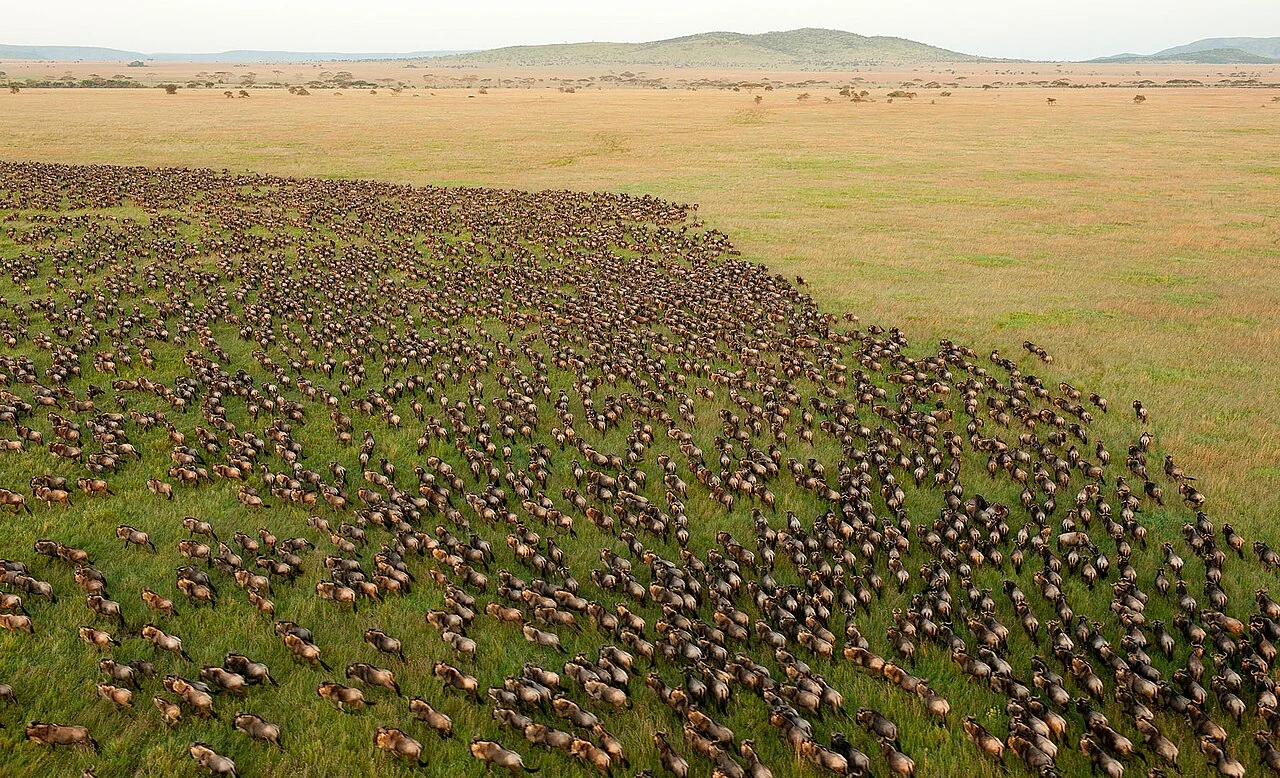
A photograph can show a dense herd and still leave most of the useful questions unanswered. Where was it taken? Was it made from a vehicle or from the air? How wide is the view? What lies outside the frame? Begin with those questions before turning a picture into an expectation for your own journey.
Separate a pattern from a prediction
The migration is an ecological process across a large landscape. A familiar seasonal diagram is a simplified explanation, not a booking guarantee. A dated observation establishes what someone recorded at that place and time. It does not establish where animals will be when you arrive or whether a particular event will occur within your viewing time.

Balloon Safari & Bush Breakfast in Serengeti - Miracle Experience
Miracle Experience is a premier eco-luxury Hot Air Balloon Safari company based in Tanzania. Our incredible safaris over the Serengeti and Tarangire N...

Serengeti Balloon Safari and authentic bush breakfast
Some things are worth getting up early for and this is certainly one of them. The wonderful experience of a hot-air...

Materuni Waterfalls, coffee tour & Kikuletwa Hot Springs
A comprehensive trip, combining hiking, coffee learn, local brewers & a refreshing dip at the hot springs Great cha...

3 Days Serengeti & Ngorongoro Group Camping Safari
On this 3-day camping safari, you will be well looked after and see some of the best that Tanzania has to offer. You...
In their 2009 paper, Ricardo M. Holdo, Robert D. Holt and John M. Fryxell compared models of wildebeest movement and resource availability. The published abstract highlights rainfall and plant nutrition as important explanations. This is a useful reason to look beyond a calendar, rather than a tool for predicting the next crossing. Read the published research abstract.
Keep the landscape in the picture
Notice grass cover, scattered trees, water and open ground as well as the animals. A close view makes individual behavior legible; a wider view shows spacing and scale. Neither is a complete account by itself. Ask your guide to explain what can actually be observed, and distinguish that explanation from what might happen later.
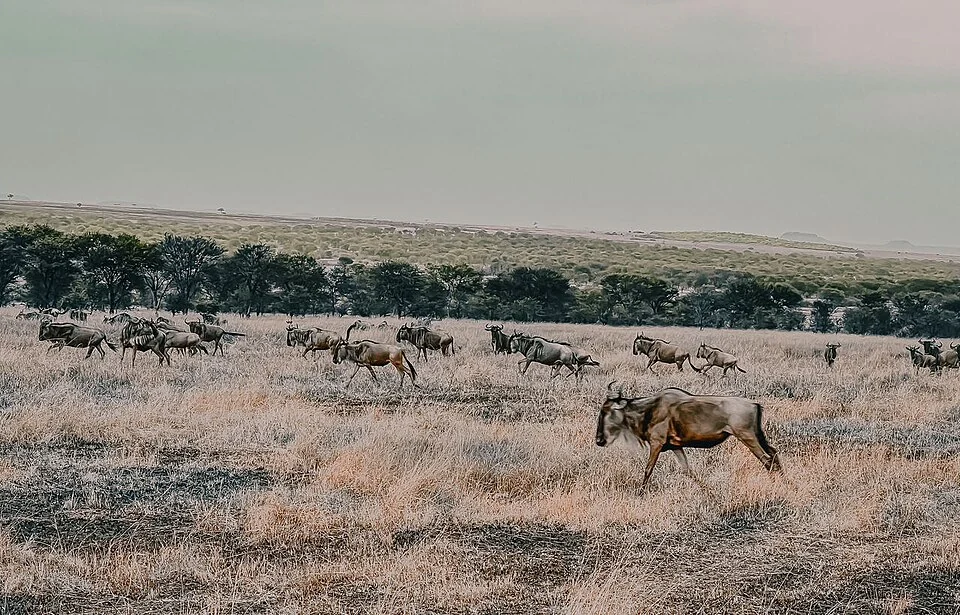

The two photographs in this guide have different dates and viewpoints. Their contrast helps explain density, but they are not a before-and-after sequence. Reading captions carefully prevents a visual arrangement from becoming a false story about a herd’s route.
Compare the questions behind an itinerary
Ask which named areas an arrangement includes, how much time is spent traveling between them, and what happens if an expected observation is unavailable. A useful answer describes the provider’s practical decisions and alternatives. A promise about animals behaving to a schedule gives you much less information about the actual service.
| Look for | Ask about |
|---|---|
| A named place | The actual viewing area and access arrangements |
| A dated observation | Its source and limits |
| A proposed journey | Travel time, guiding and alternatives |
Give ordinary observation a place
Grazing, resting and the space between animals are worth attending to. They let you learn without treating one dramatic moment as the only successful outcome. A journey can provide time to understand an ecosystem even when the scene differs from its promotional photograph.

4h Quad Adventures in Zanzibar: Nungwi / Kendwa Transfer inclus
The price for this activity applies to a maximum of 2 people per Quad. Whether you book for one or two people, the price remains the same. immerse yo...

Stone Town Private Walking Tour
It's fascinating to explore historic Stone Town - a UNESCO World Heritage Site - but it's easy to lose your way in t...

Affordable and Reliable Taxi Services in Zanzibar Island
Our services are reliable and affordable, our drivers are very friendly and they are willing to provide extra help t...

Mnemba Island snorkeling and Swimming with Dolphin
Increase your chances of spotting some of Tanzania’s rarest marine life during a snorkeling tour that takes you to...
Continue with Serengeti landscape reading, then use the comparison guide to turn your interests into specific questions. Current logistics belong with the named authority and provider responsible for the visit.